
Discover the truth behind manufacturing automation and how it can realistically improve your production lines without breaking the bank.
The pressure to modernise production lines has never been higher. Manufacturing leaders constantly hear that integrating new technologies is the only way to remain competitive, boost throughput, and maintain strict quality standards. Yet, many facilities hesitate to take the leap into automated systems.
This hesitation often stems from persistent misconceptions about what automated technology actually entails, how much it costs, and who it truly benefits. We need to separate fact from fiction. By looking past the common misunderstandings, you can make informed decisions about your engineering processes and quality control strategies.
You will learn the truth behind the perceived high costs of modernisation, understand why these systems are not just for massive corporations, and see how technology actually supports your human workforce rather than replacing it. We will also highlight the tangible benefits you can expect, from improved efficiency to better data integration.
Myth 1: Automation is Only for Large-Scale Operations
A widespread belief is that only massive automotive plants or global aerospace manufacturers can benefit from automated systems. It is easy to picture endless rows of robotic arms assembling cars and assume that level of infrastructure is required. This simply is not true.
Modern automation is highly scalable and adaptable to businesses of all sizes, including small and medium-sized enterprises (SMEs). You do not need a fully autonomous factory to see significant improvements in your production workflow.
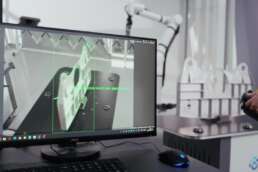
Small, targeted integrations often yield the best results for growing facilities. For example, adding an automated 3D scanning cell to a specific inspection bottleneck can drastically reduce queue times. These modular solutions allow you to scale your technology alongside your business growth, ensuring you only invest in what you actually need right now.
Myth 2: Automation is Too Expensive
Sticker shock is a genuine concern for many production managers. When evaluating new equipment, the initial capital expenditure often dominates the conversation. However, focusing solely on the upfront price tag paints an incomplete financial picture.
To understand the true cost, you must look at the Return on Investment (ROI). Automated systems consistently reduce the hidden costs that eat into your profit margins every single day. They minimise material waste, drastically cut down on scrap rates, and lower the frequency of costly rework.
Furthermore, the price of these technologies has decreased significantly over the last decade. Sensors, collaborative robots, and automated measurement systems are more accessible than ever before. When you factor in the long-term savings from improved process control and reduced downtime, the investment typically pays for itself much faster than traditional methods allow.
Myth 3: Automation Will Replace Human Workers
The fear of technology making human jobs obsolete is as old as the industrial revolution itself. In reality, modern automated systems are designed to collaborate with your workforce, not remove them from the equation.
The manufacturing sector is currently facing a significant skills shortage. Finding and retaining qualified engineers and quality control inspectors is incredibly challenging. Automation helps bridge this gap by taking over the highly repetitive, mundane, or physically demanding tasks.
By removing these tedious jobs from their daily routine, your staff can focus on higher-value activities. An inspector who previously spent hours manually checking simple dimensions can instead focus on programming, analysing complex data, and solving root-cause engineering problems. Technology empowers your team to work smarter, ultimately making their roles more engaging and valuable.
The Real Benefits of Manufacturing Automation
Once we move past the myths, the conversation can shift to the actual, proven advantages of integrating these systems into your facility. The benefits extend far beyond simply making parts faster.
Improved Efficiency and Throughput
Manual processes are inherently variable. Even the most skilled operators will experience fatigue, leading to fluctuations in cycle times and occasional inconsistencies. Automated systems provide relentless consistency.
When you automate a process like quality inspection, you remove the bottleneck that often slows down the entire production line. An automated measurement cell can capture millions of data points in a fraction of the time it takes to manually probe a part. This continuous, predictable flow ensures you can meet tight deadlines and increase your overall production throughput without sacrificing accuracy.
Reduced Errors and Better Quality Control
Human error is an unavoidable factor in manual manufacturing and inspection. Whether it is a misread gauge or an improperly loaded fixture, these small mistakes compound into significant quality issues.
Automated technology removes this variability. Systems programmed to follow precise, repeatable paths will perform the exact same operation every single time. In 3D measurement, this means your inspection data is completely reliable and objective. You catch deviations early, prevent non-conforming parts from reaching your customers, and maintain a reputation for uncompromising quality.
Seamless Data Integration
Perhaps the most powerful benefit of modern automation is the data it generates. Traditional manufacturing often relies on siloed information, where quality reports are filed away and rarely used to improve the actual process.
Automated systems seamlessly integrate into your wider digital infrastructure. When a 3D scanner inspects a part, that comprehensive data can be instantly fed back to your engineering team or directly into your statistical process control (SPC) software. This creates a closed-loop system where real-time data informs immediate process adjustments, turning your production line into a highly responsive, data-driven environment.
Embrace the Future of Manufacturing
Holding onto outdated myths about automation only holds your manufacturing potential back. The reality is that targeted, intelligent automation is accessible, cost-effective, and deeply empowering for your workforce. By investing in the right technology, you secure a distinct competitive advantage in an increasingly demanding market.
The key to success is not buying technology for the sake of it, but finding the right solutions for your specific production bottlenecks. This requires expert guidance and a clear understanding of your unique engineering challenges.
Ready to discuss your automation strategy?
The 3D Measurement Company will be attending MACH 2026 from 20-24 April at the NEC Birmingham. We invite you to visit us on Stand 18-610 to discuss your specific manufacturing challenges. Let’s have a practical conversation about how automated measurement data can improve your processes, support your team, and drive your business forward.